Design Thinking
When Levels Become Part of the Garden
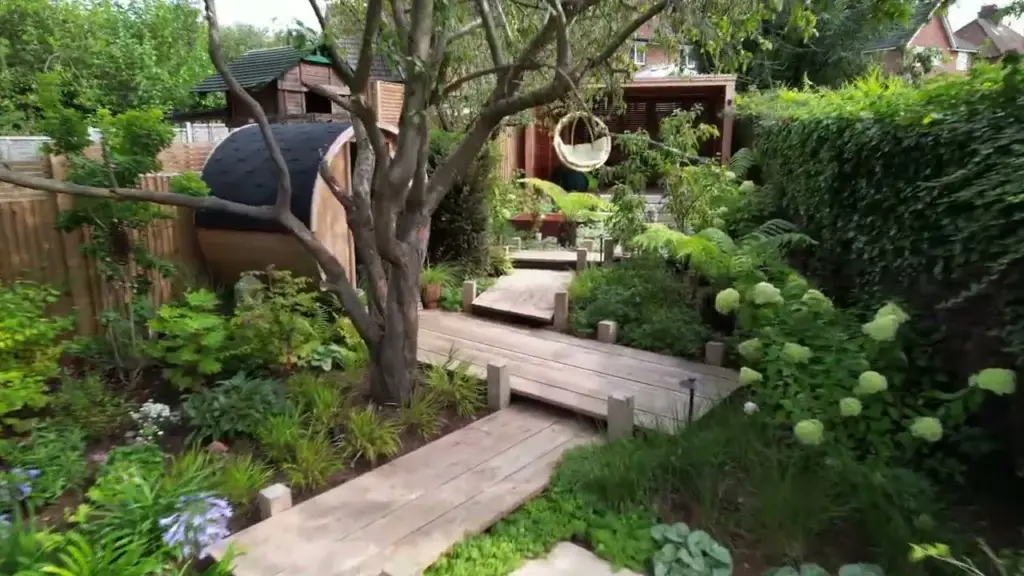
Designing a Stepped Garden Descent: a Refined Landscapes project film
A change in level can either interrupt a garden or become one of the things that gives it character.
Steps are often treated as a practical necessity, but in a refined garden they do much more than move people from one height to another. They influence pace, views, safety, rhythm, planting opportunities and the way the garden is experienced from the house to the lower parts of the site.
This short film focuses on a stepped garden descent, showing how level changes can be handled with calmness, structure and care.
Movement shaped with intention
In any sloping garden, levels need to be resolved technically. Drainage, retaining elements, foundations, materials and safe movement all matter. But the best level changes are not only technically correct; they feel natural within the wider composition. The descent in this film belongs to The Quiet Life, where the journey rises from the entertaining terrace along timber boardwalks to a cedar sauna and a secluded yoga deck, with corten step risers carrying the level changes as part of the garden’s structure rather than as engineering. The full case study is in the portfolio.
A stepped descent can create rhythm through the garden. It can slow movement, frame planting, introduce pauses and make the journey through the space feel more deliberate. The aim is for the descent to feel comfortable and intuitive, not imposed.
Where construction detail meets design judgement
Level changes sit at the point where garden design and garden construction need to work closely together. A drawing can set the intention, but the finished result depends on how the detail is built: the height of risers, the width of treads, the handling of edges, the surrounding planting and the way materials meet.
Handled well, steps become part of the garden’s structure and atmosphere. They support movement, but they also give the garden depth, proportion and a stronger sense of place.
For clients working with a sloping or complex site, explore our garden construction service, read more about garden design, or start a conversation.
Frequently asked questions
How should level changes be handled in a garden?
Level changes should be considered as part of the whole garden design, including movement, drainage, retaining structures, planting, materials and how the space will be used.
What makes a stepped garden feel natural?
A stepped garden feels natural when the proportions, materials, planting and route through the space are carefully resolved, so the descent feels comfortable rather than purely functional.
Why are levels important in garden construction?
Levels affect drainage, access, safety, paving, walls, planting and the long-term performance of the garden. They need to be planned before construction begins.
Can a sloping garden be an advantage?
Yes. With the right design and construction approach, slopes and level changes can create movement, views, zones and visual interest.
More from the Journal
-
The Quiet Principles of High-End Garden Design
The most successful high-end gardens feel calm and natural to the home, even when every detail has been carefully considered.
Read the article -
The Anatomy of a Refined Garden
A refined garden is not defined by one feature or style. It is the result of connected decisions that shape how the space is seen, built, planted, used and cared for.
Read the article -
Seeing the Garden Before It Is Built
A short film showing how 3D garden design renders help clients understand layout, levels, proportion and atmosphere before a garden moves into construction.
Read the article