Outdoor Living
Outdoor Living That Feels Designed, Not Installed
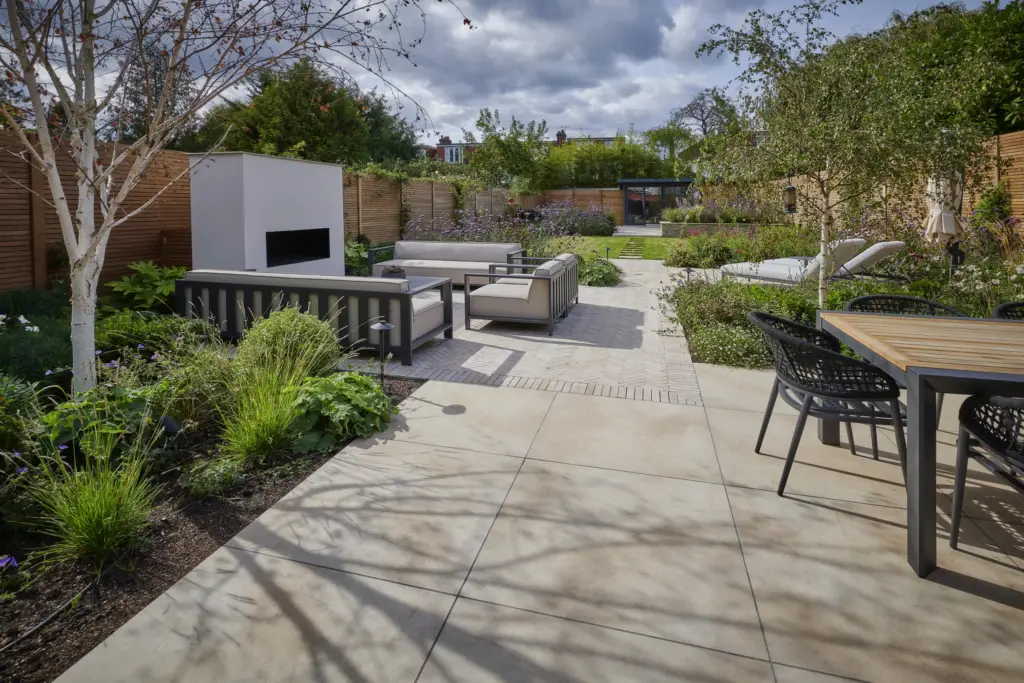
Outdoor kitchens, pergolas, pools, lighting, fire features and wellness spaces are most successful when they feel as though they belong to the garden. The aim is not to add features, but to create a coherent outdoor environment.
This distinction matters. A feature can be impressive on its own and still feel wrong in the garden. Outdoor living should be planned around movement, views, materials, planting, atmosphere and the way people actually want to spend time outside.
Start with the experience, not the product
It is easy to begin with a product: an outdoor kitchen, a pergola, a fire pit, a sauna, a pool or a hot tub. The better question is how the client wants the garden to feel and function.
Will the space be used for quiet morning coffee, family meals, larger gatherings, evening drinks, wellness routines or year-round entertaining? The answer should shape the layout before any individual feature is specified.
The terrace is often the hinge between house and garden
A terrace can do much more than provide a place to sit. It manages the transition from inside to outside, sets the tone for the materials and often becomes the most used part of the garden.
In North London and Hertfordshire, where many clients want the garden to work as an extension of the home, this threshold is especially important. The terrace should feel generous, practical and connected to the wider garden rather than being treated as a separate hard surface.
Outdoor kitchens need to be planned early
An outdoor kitchen affects services, layout, shelter, circulation, materials, lighting and views. If it is added late, it can dominate the garden or feel awkwardly placed.
When planned as part of the design, it can sit naturally within the terrace, dining space or entertaining area, supported by planting, lighting and comfortable movement around it.
Pergolas, shade and shelter should have purpose
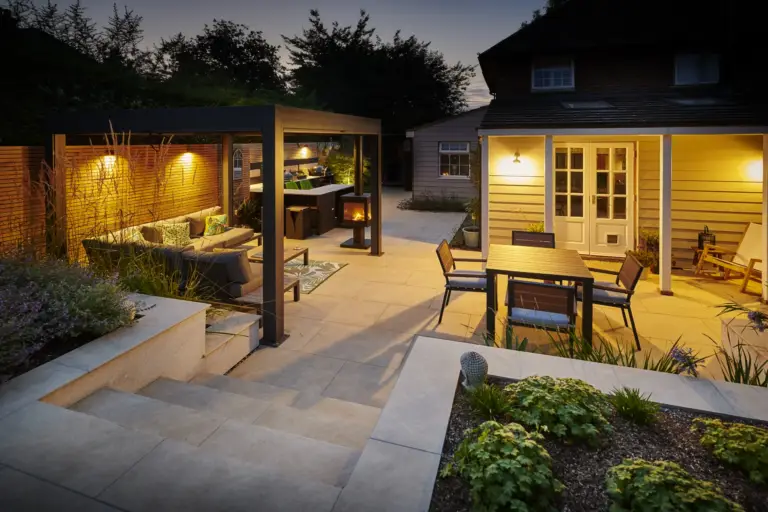
Pergolas and shade structures can create intimacy, frame views, protect seating areas and bring human scale to larger spaces. They should not be used simply to fill an empty corner.
Their success depends on position, proportion, material and the way planting interacts with them over time.
Lighting changes the garden after dusk
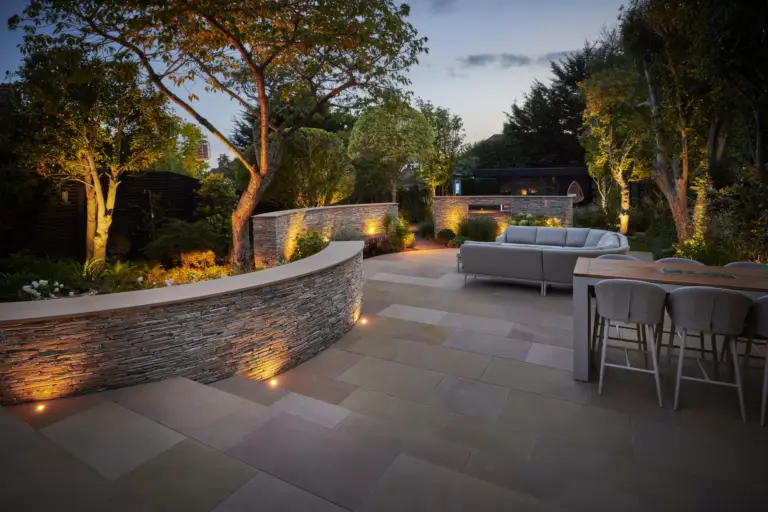
Lighting should be subtle and purposeful. It can guide movement, reveal planting, pick out steps, soften boundaries and allow outdoor living spaces to be used comfortably in the evening.
The strongest lighting schemes feel atmospheric rather than theatrical. They support the garden rather than overpowering it.
Wellness features need restraint
Saunas, cold plunges, showers, pools and hot tubs can all belong in a refined garden, but they need to be handled with care. The risk is that they feel like isolated lifestyle products rather than part of the landscape.
Material choices, screening, access, privacy, planting and lighting all influence whether wellness features feel elegant and settled.
A designed garden makes features feel inevitable
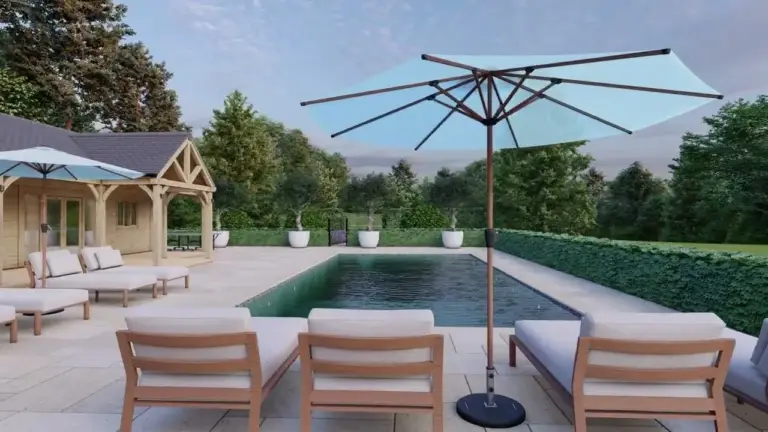
Projects such as The Farmhouse Courtyard, The Layered Retreat and The Poolside Garden can be used to show how outdoor living works best when it supports the wider garden experience.
If you are considering outdoor living features as part of a wider garden project, start a conversation.
Frequently asked questions
What is outdoor living design?
Outdoor living design considers how terraces, kitchens, seating, lighting, shade, fire, water and wellness features work as part of the wider garden.
Should outdoor kitchens be planned during the garden design stage?
Yes. Services, layout, materials, shelter, views and movement all affect how successful an outdoor kitchen will feel.
Can outdoor living features be added to an existing garden?
They can, but they still need to be considered carefully so they feel integrated rather than added on.
More from the Journal
-
Designing Outdoor Living Before the Build Begins
A 3D design fly-through showing how a swimming pool, outdoor kitchen, terraces and planting can be planned as one coherent outdoor living scheme.
Read the article -
Refined Landscapes Wins BALI National Landscape Award for Buckhurst Hill Garden
Refined Landscapes was delighted to win a 2025 BALI National Landscape Award for its Private Residence in Buckhurst Hill project, recognised in the Domestic Garden Construction (£100k-£250k) category.
Read the article -
A Garden for the Life You Mean to Live
A refined wellness garden should begin with the life it is meant to support, not a list of features. Explore how intention becomes ritual through design, planting, materials and outdoor living.
Read the article